
Chronically Tired Despite Drinking Tons of Water? Here’s What You’re Missing
By Mackenzie Suggs
When it comes to wellness, “drink more water” might be the most common advice out there. But have you ever guzzled water all day long and still felt exhausted, dizzy, bloated, or mentally foggy?
If you are checking off your daily water goal but still struggling with muscle cramps or afternoon brain fog, hitting a target number of ounces or glasses isn't enough. It’s time to look deeper.
Let’s break down what true hydration actually means and the simple, everyday habits you can use to support your daily hydration.
What is True Hydration?
Hydration is the process of supplying your cells (not just your mouth) with the water and minerals they need to function optimally. Your cells need a strict balance of water and electrolytes to absorb, hold, and utilize fluid efficiently. (Not sure what electrolytes are? Check out THIS article!) When you drink plain water without enough minerals, it can actually dilute your system, flushing out your existing electrolytes and inadvertently causing symptoms of dehydration.
The Golden Rule of Hydration:
Hydration = Water + Electrolytes + Cellular Balance
Understanding this formula completely changes how we view our daily fluid intake. It reveals that water cannot work alone; it requires a hidden partnership to actually function inside the body.
The Hidden Partnership: Water + Electrolyte Synergy
Electrolytes are minerals like sodium, potassium, calcium, and magnesium. They act as the biological "keys" that unlock your cells so water can actually get inside.
When your electrolyte levels drop due to daily stressors, heavy workouts, morning coffee, or a low-mineral diet, drinking plain water can actually work against you. Research shows that suddenly chugging large amounts of plain water triggers a biological flush response, diluting your body’s sodium levels even further. This delicate synergy between minerals and fluid is exactly why the type of water you choose matters so much and why many of us are falling into a common household trap.
The Filtered Water Trap (And How to Fix It)
The Problem with Filtered Water: Most tap water is treated with chemicals like chlorine and fluoride. While home filters (like Brita or Berkey) do a great job of removing these toxins, they also strip away beneficial trace minerals like magnesium and calcium. If you only drink heavily purified water, you are drinking "empty" water.
The Power of Mineral Water: Naturally occurring mineral water contains a built-in mix of essential electrolytes. Clinical studies measuring the Beverage Hydration Index prove that drinks with higher mineral contents are significantly more effective at keeping you hydrated over time than plain, purified water.
You don't need to switch to expensive bottled brands. You can easily revive your home-filtered water by adding trace mineral drops, a tiny pinch of high-quality sea salt, or enjoying a cup of mineral-rich herbal tea or bone broth during the day.
Once you realize that hydration is about mineral balance rather than just liquid volume, several other mainstream health assumptions start to fall apart. Let's dismantle a few of the biggest myths keeping people dehydrated.
4 Hydration Myths Debunked
Myth 1: You must drink 8 glasses of water a day.
The Truth: Hydration needs are deeply personal. They vary based on your weight, environment, stress levels, and diet. Your thirst, morning energy levels, and urine color are much more reliable gauges.
Myth 2: Completely clear urine means you are perfectly hydrated.
The Truth: Constantly clear urine is often a warning sign of overhydration and electrolyte dilution. Aim for a pale, translucent yellow (the color of light lemonade).
Myth 3: You can only get hydrated by drinking fluids.
The Truth: Food is a hydration powerhouse. Large population surveys show that moisture from solid foods accounts for roughly 18% to 27% of a person's total daily water intake.
Myth 4: Electrolyte supplements are only for elite athletes.
The Truth: Anyone dealing with daily stress, drinking filtered water, consuming caffeine, or experiencing a mineral-poor diet can benefit from targeted electrolytes.
Because food plays such a massive role in this equation, upgrading your hydration doesn't just happen at the water pitcher it happens on your plate.
Top Hydrating Foods to Eat for Electrolytes
According to USDA data, eating fruits and vegetables with a water content over 80% is one of the easiest ways to hydrate your body on a cellular level without throwing off your mineral balance. These whole foods naturally package water alongside the exact electrolytes needed to absorb it.
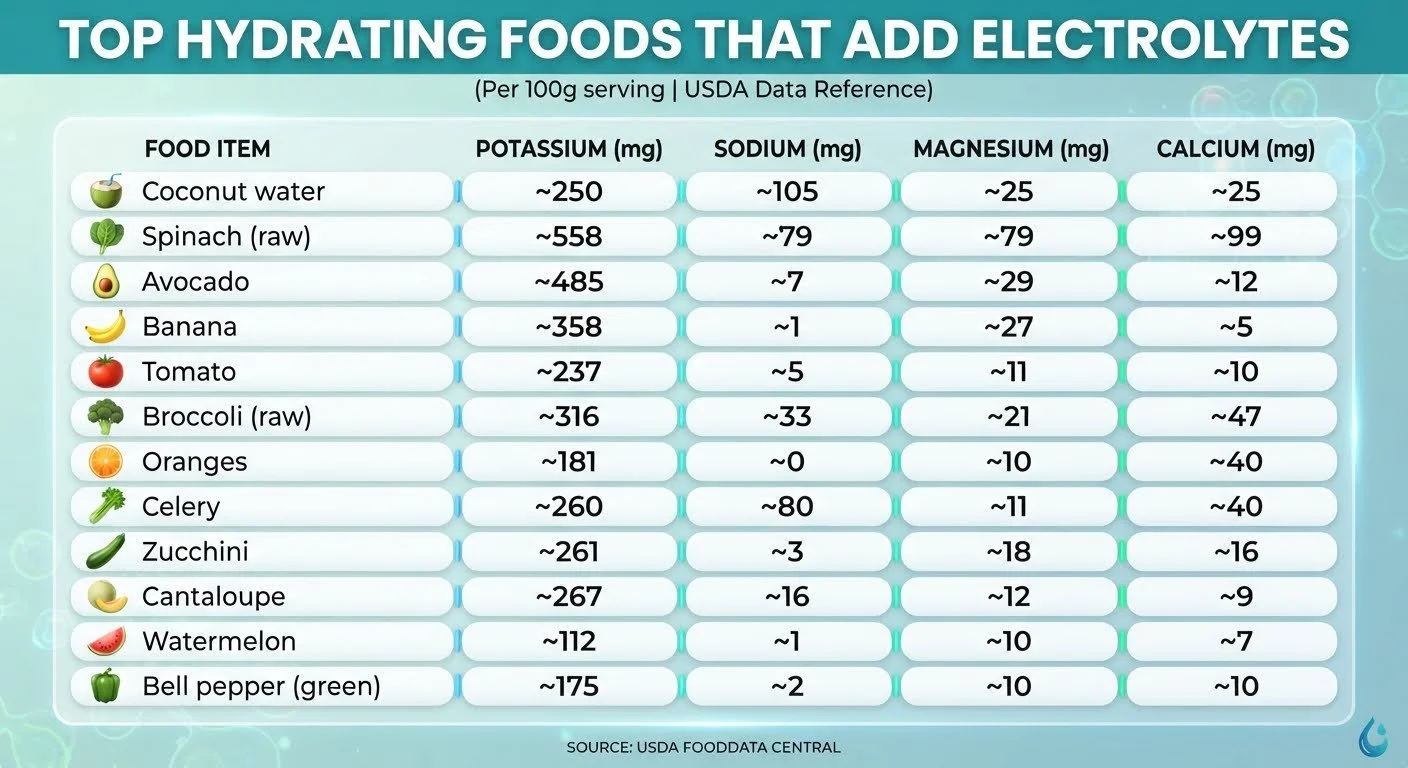
Coconut Water: Nature’s ultimate sports drink packed with potassium and magnesium.
Cucumbers & Watermelon: Both sit at roughly 92–96% water content and are loaded with protective antioxidants.
Bone Broth: Provides a deeply absorbing mix of trace minerals, collagen, and amino acids.
Unrefined Sea Salt: Adding a pinch of Celtic or pink Himalayan salt to your meals adds natural sodium along with dozens of essential trace minerals.
When we neglect these hydrating foods and rely solely on empty, filtered fluids, our bodies begin to send out warning signs. Unfortunately, most people completely misinterpret these signals.
Do You Have "Hidden Dehydration"?
Medical reviews show that chronic, low-grade mineral imbalances frequently mimic everyday health complaints. Because we are taught that dehydration only means "feeling thirsty," we tend to overlook the subtle signs that our cells are actually starving for minerals:
Unexplained midday fatigue or brain fog
Frequent, dull tension headaches
Sluggish digestion or chronic constipation
Sudden, intense cravings for sugar or salt
Muscle twitching or cramping (especially while sleeping)
Mild lightheadedness when standing up quickly
If any of these symptoms sound familiar, you don't need to force yourself to drink another gallon of water. Instead, you need to change how you approach your daily routine.
How to Hydrate Smarter Starting Today
Upgrade Your Morning Routine: Before your morning coffee, drink 8–12 oz of filtered water mixed with a small pinch of unrefined sea salt and a squeeze of fresh lemon juice. This immediately replenishes the minerals you naturally lost overnight.
Eat Your Hydration: Actively add one high-water food to your lunch and dinner—like a side of sliced cucumbers, a handful of raw spinach, or a starter cup of bone broth.
Ditch the Sugary Sports Drinks: If you use an electrolyte powder, skip the ones loaded with artificial dyes, chemicals, and massive amounts of cane sugar. Opt for clean, mineral-focused blends instead.
Final Thoughts
True hydration is one of the most overlooked foundations of health. It is entirely about the quality and composition of what you ingest, not just the quantity. If you've been guzzling water but still feel completely drained, stop drowning your cells and start feeding them minerals.
Start small today: Add a tiny pinch of sea salt to your water bottle or eat a kiwi with your breakfast. Your body will thank you.
References
Popkin, B. M., D'Anci, K. E., & Rosenberg, I. H. (2010). Water, hydration, and health. Nutrition Reviews, 68(8), 439–458. Available via the National Institutes of Health PMC Journal.
National Center for Biotechnology Information. (2023). Chapter 15: Fluids and Electrolytes. Nursing Fundamentals. Available via the NCBI Bookshelf.
Maughan, R. J., Watson, P., Cordery, P. A., et al. (2016). A randomized trial to assess the potential of different beverages to affect hydration status: development of a beverage hydration index. The American Journal of Clinical Nutrition, 103(3), 717–723. Available via The American Journal of Clinical Nutrition.
Millard-Stafford, M., Snow, T. K., Jones, M. L., et al. (2021). The Beverage Hydration Index: Influence of Electrolytes, Carbohydrate and Protein. Nutrients, 13(9), 3245. Available via the MDPI/PMC Repository.
National Research Council (US) Subcommittee on the Tenth Edition of the RDAs. (1989). Water and Electrolytes. Recommended Dietary Allowances: 10th Edition. Available via the National Academies Press Bookshelf.
Taylor, K., & Jones, E. B. (2023). Adult Dehydration. StatPearls Publishing. Available via StatPearls/NCBI.
