
By Mackenzie Suggs, M.S.
Carbohydrates are easily the most misunderstood macronutrient (one of the three major food groups your body needs in large amounts, alongside protein and fat) in the fitness and wellness world. They are simultaneously praised as the ultimate performance enhancer and villainized as the root cause of metabolic dysfunction (when the body struggles to properly convert food into energy) or fat storage in the body; leaving many people completely frozen in confusion at the grocery store on whether to purchase carbohydrates or avoid them.
To understand why they cause so much debate, we have to look at what they actually are at their biological baseline.
What Are Carbohydrates?
Carbohydrates are organic compounds made of carbon, hydrogen, and oxygen atoms whose primary biological role is to provide efficient, readily available energy to the human body. From a basic math standpoint, carbohydrates provide 4 calories (a unit used to measure the energy value of food) of energy per gram. When you consume them, your digestive system breaks these compounds down into their simplest form of a sugar molecule: glucose (the basic sugar that enters your bloodstream, commonly called blood sugar). This glucose serves as the primary, mandatory fuel source for your brain, which burns through roughly 120 grams of glucose every single day just to maintain focus and executive function. Without them, the body is forced to rely on slower, less efficient backup pathways to keep your energy upright. And I know what you’re thinking… so that means I need to eat exactly 120 grams of carbohydrates a day? No, not necessarily. Your body has an incredible built-in safety system with many other processes that allow the brain to get energy not just from the direct foods you eat. For instance, your liver can actually step in and create its own sugar from parts of the proteins and fats you consume to make energy for the brain to use. However, while your body can survive on these internal backup systems, providing enough carbohydrates through your diet ensures your brain and muscles have the immediate, preferred fuel they need to thrive without putting extra stress on your system.
Once absorbed, any glucose that isn't immediately used for energy is packed away in your muscles and liver as an emergency fuel reserve called glycogen (stored muscle sugar). As your body builds these energy stores, a unique physical reaction occurs: every single gram of stored carbohydrate binds to and holds roughly 3 grams of water. This water retention is completely normal and healthy, acting as the exact reason why your muscles look full and hydrated when you are eating carbs, and why people see a sudden drop on the scale when they drastically cut them out it is simply water weight leaving the tissue, not actual fat loss.
Recognizing these core biological facts is the first step to shifting your perspective. The real secret to mastering your health lies in understanding that carbohydrates are not inherently good or bad, they are tools. Your body’s relationship with carbohydrates depends entirely on your unique physiology, daily activity levels, metabolic age, and how you choose to structure your plate. To understand how to make them work for your energy instead of against it, we must look at how these molecular chains are built and how they hit your bloodstream.
Meet the Carb Family: Simple vs. Complex
When you eat carbohydrates—whether from an apple or a piece of white bread—your digestive system breaks them down into a tiny sugar molecule called glucose. Glucose is the primary fuel that your brain and muscles run on. In fact, your brain alone requires roughly 120 grams of glucose every single day just to stay alert and focused.
Carbohydrates are generally categorized into two main groups based on how quickly your body breaks them down into glucose: simple and complex carbohydrates.
1. Simple Carbohydrates (Fast Energy)
Simple carbohydrates are made of short, basic chemical chains. Because they are so small, your body can digest them almost instantly, dumping glucose rapidly into your bloodstream.
Examples: White table sugar, honey, fruit juice, maple syrup, sodas, candies, and refined treats like Oreos.
The Pro: They provide an immediate, lightning-fast burst of energy, making them helpful right before an intense workout.
The Con: Because they digest so fast, they often cause a rapid spike in energy followed by a harsh energy crash.
2. Complex Carbohydrates (Sustained Energy)
Complex carbohydrates are made of long, complex chains of sugar units bonded together. Your digestive system has to work much harder to cut these chains apart, which means glucose enters your bloodstream at a slow, steady trickle.
Starches: This is the storage form of energy in plants. Excellent sources include potatoes, sweet potatoes, oats, brown rice, quinoa, and whole-wheat pasta.
Fiber: Fiber is a unique type of complex carbohydrate found in plant foods that your body cannot actually digest or absorb. Instead of turning into sugar, fiber passes through your system, keeping your digestion regular, feeding healthy gut bacteria, and keeping you feeling full for longer. Good sources include beans, lentils, broccoli, chia seeds, and raspberries
The Building Blocks: Glucose, Fructose, and Galactose
To see exactly how these two types of carbs are made, we can look at the three single sugar units—known as monosaccharides—that serve as the raw ingredients for every carbohydrate on earth:
Glucose: The primary sugar molecule your body and brain use directly for fuel.
Fructose: The sugar naturally found in fruits and honey. It has to make a pit-stop at your liver first to be processed before your body can use it.
Galactose: The natural sugar unit found in dairy products.
When these single blocks link up in pairs of two, they create disaccharides (double sugars), which make up common simple carbs like standard white table sugar (Glucose + Fructose), milk sugar (Glucose + Galactose), or malt sugar found in grains (Glucose + Glucose). When thousands of these single glucose blocks chain themselves together into massive structures wrapped in fiber, they transform into complex carbohydrates. No matter how simple or complex a carb looks on your plate, your stomach's ultimate job is to un-link those chains back down into those single individual sugars.
Understanding this structural difference helps clear up the frustrating, ongoing debate of "what’s the best carb?" In functional nutrition, a single superior carbohydrate does not exist because the metabolic value of a carbohydrate depends entirely on the context of when and why you are consuming it.
Why "Slow Carbs" Can Still Cause a Crash
It is a common belief that simply choosing a "slow carb" like oatmeal over a "fast carb" like white rice or a banana means your blood sugar won't spike. But let's be real: a carb is still a carb. If you eat a massive bowl of oats entirely by itself on an empty stomach, it is still going to cause a sharp rise in your blood sugar followed by a steep drop that causes fatigue. The fiber helps a little, but it isn't a magic shield.
The true secret isn't just the carb you choose, it's how you dress it by pairing it with other foods. When you pair that oatmeal, banana, or rice with a high-quality protein or a healthy fat, you change how your body digests it. Proteins and fats trigger fullness hormones in the gut, which significantly slows down how fast your stomach empties.
Instead of a sharp spike and a sudden mid-afternoon energy slump, you create a much lower, smoother, and more stable rise in your blood sugar. By matching your carbs to your physical demands and always anchoring them with protein or fats, you shift from looking at carbs as "good or bad" to looking at them as precise, controlled fuel.
Finding Your Match: How Much Do You Need?
Just like timing, your daily carbohydrate needs are unique to you. Rigid, one-size-fits-all diet plans inevitably leave people feeling completely exhausted, moody, or dealing with an upset stomach. To find your personal sweet spot, your daily targets depend on three simple things:
1. Your Daily Movement
Your muscles and liver store carbohydrates as an internal fuel tank for hard work. If your day mostly involves desk work or casual walking, your fuel tanks stay relatively full. This means your body runs beautifully on a lower-to-moderate carb intake while relying on healthy fats and proteins for baseline energy.
However, if you lift weights intensely or do explosive workouts, carbs are your primary fuel. Hard training relies heavily on burning stored sugar for short bursts of power. Dropping your carbs too drastically when training hard can lead to flat muscles, high stress hormones, stalled strength, and poor recovery.
2. Your Age and Metabolism
Your internal biology changes over time, especially regarding how you process your food. As we age, we naturally lose a bit of muscle mass, which can make our bodies less efficient at handling blood sugar if we aren't actively lifting weights to preserve that muscle.
Younger, highly active people often have great "metabolic flexibility"—the ability to switch seamlessly between burning carbs and burning fats based on what they eat. Older adults, or anyone dealing with sluggish metabolisms or stomach sensitivities, often feel much better with a more controlled, even breakdown of carbs throughout the day.
3. How Your Body Feels
Ultimately, the math on paper has to match how you feel in real life. Your body's feedback is your best tracker. Pay close attention to your sleep quality, stomach comfort, gym performance, and mid-day energy levels. Your body will give you clear signals when your personal balance of carbs and fats is exactly where it needs to be.
Putting It into Practice: How to Calculate Your Personal Target
To move past the guesswork and find your baseline, nutrition research uses a simple gram-per-kilogram formula based on your weight and activity level.
Here is exactly how to calculate your personalized daily range in three simple steps:
Step 1: Find your weight in kilograms. Divide your current body weight in pounds by 2.2. (Example: A 165 lb person is roughly 75 kg).
Step 2: Choose your activity level. Match your daily routine to one of these four categories:
Desk Job / No Exercise: Around 3 grams per kg each day. (Best for desk-bound careers or minimal daily steps).
Light Activity: 3 to 5 grams per kg each day. (Desk lifestyle with light workouts under 30 minutes, or rest days).
Moderate Activity: 5 to 7 grams per kg each day. (Intense weight lifting or structured fitness for about 1 hour per day).
High Activity: 6 to 8 grams per kg each day. (High-intensity endurance work or sports training for 1 to 3 hours per day).
Step 3: Run the math. Multiply your weight in kilograms by your activity number. For our 75 kg lifter hitting a moderate training schedule, the daily target range sits beautifully between 375 and 525 grams of carbohydrates.
Once you have a general idea of how many total daily carbohydrates your lifestyle demands, you can focus on presenting those carbs to your digestive system so your daily energy remains completely rock-solid.
(Note: This information is based on research and dietary guidelines to help you establish a baseline, and individual needs can vary).
Stopping the Energy Rollercoaster
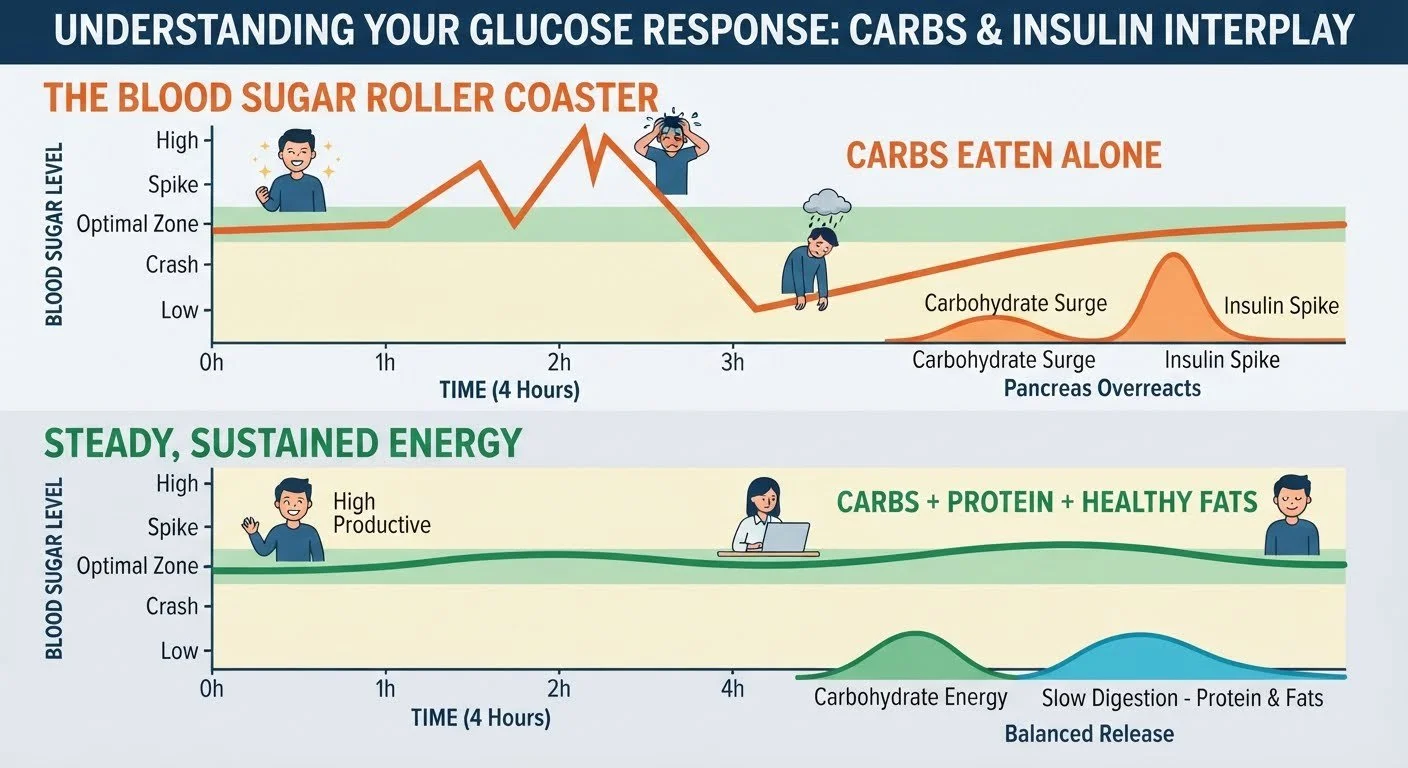
When you eat carbohydrates completely by themselves—especially simple or processed starches—they hit your system fast, causing a quick spike in your blood sugar. In response, your body releases a large wave of insulin to clear that sugar out of your blood. This sudden drop is called reactive hypoglycemia but you probably know it better as that frustrating mid-afternoon energy crash.
To stop this disruptive cycle and protect your daily focus, you need to use a simple strategy: strategic food pairing.
When you anchor your carbohydrates with clean protein and healthy fats, you completely change how your body handles digestion. Proteins and fats trigger the release of natural fullness hormones in your gut, which significantly slows down how fast your stomach empties. Because food exits your stomach gradually, sugar enters your bloodstream at a slow, steady trickle. This gives you a long-lasting wave of stable energy instead of a rollercoaster ride.
You can easily use this pairing strategy with simple, whole-food upgrades to your daily routine:
Morning Oats: Swap oatmeal made with water for oats mixed with a scoop of protein powder and topped with walnuts.
Mid-Day Fruit: Pair a standalone banana or apple with two tablespoons of almond butter or a handful of raw almonds.
Quick Snacks: Upgrade plain rice cakes or crackers by adding turkey slices and avocado on top.
By mastering these simple daily pairings, you keep your energy steady and build a rock-solid foundation. This sets you up perfectly if you ever want to explore advanced training tools to match your fitness goals.
Next-Level Strategies: Carb Loading vs. Carb Cycling
If you are training for specific athletic events or looking for precise changes in your performance, you can use advanced timing strategies. Two of the most popular methods in the fitness world are carbohydrate loading and carbohydrate cycling.
Carbohydrate Loading
This strategy involves eating exceptionally high amounts of carbohydrates for 1 to 3 days before a major endurance event or a physical competition. The goal is to completely top off and maximize your muscle fuel tanks (glycogen) so you don't run out of energy halfway through your event.
It is important to remember that this is a specific tool meant for marathon runners, cyclists, or competitive bodybuilders preparing for a stage. For everyday fitness and general health, eating consistent, balanced daily meals is a much better approach and is far easier on your digestive system.
Carbohydrate Cycling
Instead of eating the exact same amount of food every single day, carbohydrate cycling means alternating between high-carb days, moderate-carb days, and low-carb days throughout your training week.
High-Carb Days: Scheduled on your heaviest training days (like leg day) when your muscles need maximum fuel to perform and recover.
Low-Carb Days: Scheduled on rest days when you are mostly sitting or recovering, allowing your body to naturally lean on fats for fuel.
While rigid, complex cycling schedules are incredibly popular on social media, your body prefers long-term balance over strict 24-hour math. Rather than stressing over exact protocols, a more sustainable approach is to look at your training phases intuitively: naturally eat a bit more whole-food carbs when you are moving a lot, and scale back slightly when you are resting and recovering.
The Takeaway
At the end of the day, carbohydrates are not a metabolic enemy to be feared; they are your body's most efficient, preferred source of physical and mental fuel. Instead of fearing the molecule, learn to understand its biology. By prioritizing complex, nutrient-dense whole foods as your baseline, utilizing fast-digesting simple carbs strategically around your training window, and always pairing your carbs intentionally, you can keep your blood sugar, energy, and hormonal health rock-solid.
References
Slavin, J., & Carlson, J. (2014). Carbohydrates. Advances in Nutrition, 5(6), 760–761. doi.org
Ludwig, D. S. (2002). The glycemic index: physiological mechanisms relating to obesity, diabetes, and cardiovascular disease. JAMA, 287(18), 2414–2423. doi.org
Richter, E. A., & Hargreaves, M. (2013). Exercise, GLUT4, and skeletal muscle glucose uptake. Physiological Reviews, 93(3), 993–1017. doi.org
Mata, F., Valenzuela, P. L., Gimenez, J., Tur, C., Ferreria, D., Domínguez, R., Sanchez-Oliver, A. J., & Martínez-Sanz, J. M. (2019). Carbohydrate availability and physical performance: physiological overview and practical recommendations. Nutrients, 11(5), 1084. doi.org
Goodpaster, B. H., & Sparks, L. M. (2017). Metabolic flexibility in health and disease. Cell Metabolism, 25(5), 1027–1036. doi.org
Gentilcore, D., Chaikomin, R., Jones, K. L., Russo, A., Feinle-Bisset, C., Wishart, J. M., Horowitz, M., & Rayner, C. K. (2006). Effects of fat, protein, and carbohydrate and their combinations on gastric emptying, blood pressure, and glycemic responses in healthy older subjects. The Journal of Clinical Endocrinology & Metabolism, 91(12), 4766–4772. doi.org
Burke, L. M., van Loon, L. J., & Hawley, J. A. (2017). Postexercise muscle glycogen resynthesis in humans. Journal of Applied Physiology, 122(5), 1055–1067. doi.org
Jeukendrup, A. E. (2017). Periodized nutrition for athletes. Sports Medicine, 47(Suppl 1), 51–63. doi.org
