
Must-Read Books on Functional and Integrative Nutrition Topics
By Mackenzie Suggs, M.S.
As a nutritionist deeply rooted in full-body wellness, I know how powerful the right book can be—the kind that shifts your perspective, deepens your understanding, and sparks real healing from the inside out.
These are the books and resources that have shaped not only my personal health journey but also the way I serve and support my clients today. I remember what it felt like to crave deeper knowledge and guidance from others in the field—only to hit a wall when no one would share where to begin.
You still have to purchase the books, of course—but why gatekeep the information? I believe in learning and lifting others up. So I’m sharing the tools that helped me build my foundation—so you can do the same.
Whether you’re here to deepen your own understanding of functional, integrative, and holistic nutrition—or you’re a fellow practitioner building your toolkit—these reads have something powerful to offer.
1. Drug Muggers by Suzy Cohen
“Drug mugger: An over-the-counter or prescribed medication, food, herb, medical condition, or lifestyle choice that is capable of robbing your body’s natural stores of an important vitamin, mineral, or hormone. ”
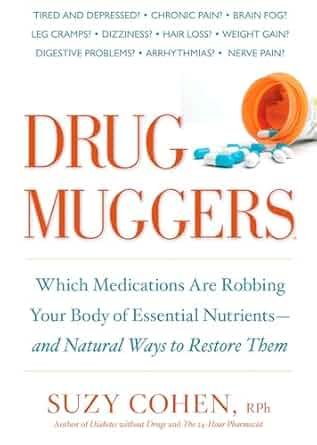
This book is a game changer if you're taking medications (or work with clients who are). Suzy breaks down how common drugs deplete your body of critical nutrients—and what to do about it. It’s functional nutrition meets pharmacy, written in a way that’s super accessible and empowering.
Focus: How common medications deplete vital nutrients—and what to do about it
Key Topics: Nutrient-drug interactions, supplements, medication side effects, recovery protocols
2. Deep Nutrition by Dr. Catherine Shanahan
“Your genes are not your destiny. What you eat can change how your genes behave.”
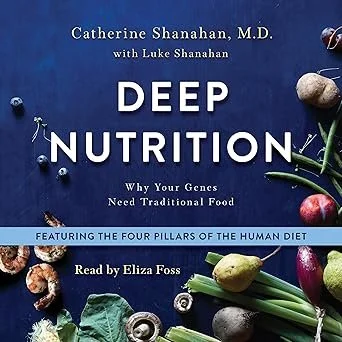
This book connects ancestral eating with modern science in a way that’s hard to unsee. Dr. Shanahan digs into how nutrition impacts gene expression, fertility, facial structure, athletic performance, and even behavior. It’s deep (pun intended) but so worth the read.
Focus: Epigenetics, ancestral diets, traditional food wisdom
Key Topics: The Four Pillars of traditional diets, gene expression, real food vs processed food
3. Hanger Management by Dr. Susan Albers
“Being kind to yourself during moments of emotional or physical hunger is a skill that transforms your relationship with food.”
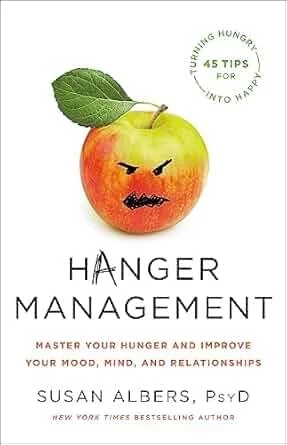
A quick but powerful read on how blood sugar affects mood, cravings, and your ability to make decisions. This book blends psychology and nutrition seamlessly.
Focus: The emotional and psychological side of eating and hunger regulation
Key Topics: Mindful eating, emotional eating, self-awareness, hunger cues
4. Brain Maker by Dr. David Perlmutter
“The health of your brain is, in many ways, dictated by the state of your microbiome.”
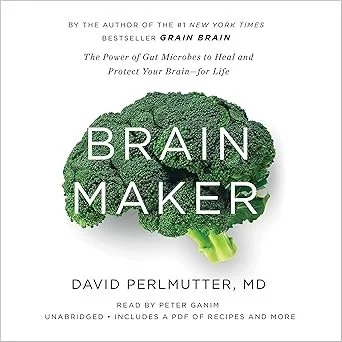
Your gut and your brain are in constant conversation. Dr. Perlmutter explores the microbiome’s role in mental health, neurodegeneration, and inflammation, with actionable tips to rebuild a healthier gut-brain axis.
Focus: The gut-brain connection and the microbiome’s role in neurological health
Key Topics: Gut bacteria, inflammation, mental health, autism, Alzheimer’s
